Showing posts with label Recall. Show all posts

Wednesday, January 25, 2012

Adam Smith on Scott Walker and his Supporters

Adam Smith is usually claimed by conservatives since his economic principles, detailed in his masterpiece The Wealth of Nations underpin the ideas of modern "free market" fetishists.  Never mind that what Smith said has been perverted, twisted and distorted out of all recognizability by libertarian economists… I digress.

What many may not realize is that Smith, like his American revolutionary counterparts, was reacting to the tyrants of his day.  And when you read his work in the context of our modern political circumstances in Wisconsin, he sounds positively revolutionary!

Read the following extended passage from Smith's Theory of Moral Sentiments with Scott Walker and his Tea Party minions in mind.

When we consider the condition of the great, in those delusive colours in which the imagination is apt to paint it. it seems to be almost the abstract idea of a perfect and happy state. It is the very state which, in all our waking dreams and idle reveries, we had sketched out to ourselves as the final object of all our desires. We feel, therefore, a peculiar sympathy with the satisfaction of those who are in it. We favour all their inclinations, and forward all their wishes. What pity, we think, that any thing should spoil and corrupt so agreeable a situation! We could even wish them immortal; and it seems hard to us, that death should at last put an end to such perfect enjoyment. It is cruel, we think, in Nature to compel them from their exalted stations to that humble, but hospitable home, which she has provided for all her children. Great King, live for ever! is the compliment, which, after the manner of eastern adulation, we should readily make them, if experience did not teach us its absurdity. Every calamity that befals them, every injury that is done them, excites in the breast of the spectator ten times more compassion and resentment than he would have felt, had the same things happened to other men. It is the misfortunes of Kings only which afford the proper subjects for tragedy. They resemble, in this respect, the misfortunes of lovers. Those two situations are the chief which interest us upon the theatre; because, in spite of all that reason and experience can tell us to the contrary, the prejudices of the imagination attach to these two states a happiness superior to any other. To disturb, or to put an end to such perfect enjoyment, seems to be the most atrocious of all injuries. The traitor who conspires against the life of his monarch, is thought a greater monster than any other murderer. All the innocent blood that was shed in the civil wars, provoked less indignation than the death of Charles I. A stranger to human nature, who saw the indifference of men about the misery of their inferiors, and the regret and indignation which they feel for the misfortunes and sufferings of those above them, would be apt to imagine, that pain must be more agonizing, and the convulsions of death more terrible to persons of higher rank, than to those of meaner stations.

Upon this disposition of mankind, to go along with all the passions of the rich and the powerful, is founded the distinction of ranks, and the order of society. Our obsequiousness to our superiors more frequently arises from our admiration for the advantages of their situation, than from any private expectations of benefit from their good-will. Their benefits can extend but to a few, but their fortunes interest almost every body. We are eager to assist them in completing a system of happiness that approaches so near to perfection; and we desire to serve them for their own sake, without any other recompense but the vanity or the honour of obliging them. Neither is our deference to their inclinations founded chiefly, or altogether, upon a regard to the utility of such submission, and to the order of society, which is best supported by it. Even when the order of society seems to require that we should oppose them, we can hardly bring ourselves to do it. That kings are the servants of the people, to be obeyed, resisted, deposed, or punished, as the public conveniency may require, is the doctrine of reason and philosophy; but it is not the doctrine of Nature. Nature would teach us to submit to them for their own sake, to tremble and bow down before their exalted station, to regard their smile as a reward sufficient to compensate any services, and to dread their displeasure, though no other evil were to follow from it, as the severest of all mortifications. ... Even when the people have been brought this length, they are apt to relent every moment, and easily relapse into their habitual state of deference to those whom they have been accustomed to look upon as their natural superiors. They cannot stand the mortification of their monarch. Compassion soon takes the place of resentment, they forget all past provocations, their old principles of loyalty revive, and they run to re-establish the ruined authority of their old masters, with the same violence with which they had opposed it.  (emphasis added)

I marvel at the way Smith so accurately captures the relationship between ruler and ruled and how deference and favor play a role in maintaining the hierarchy of social relationships.  These principles apply even in elected government.  Think about how the Walker administration has tried to control the will of the people.  From the DOA rules governing assembly to the rules imposed on dissent in the galleries to the fraudulent claims of excessive damage to the Capitol, so much deference is demanded of the people by their rulers we've become a satrapy rather than a republic.

Smith is getting at the true nature of power: hierarchy.  Power is the ability to rule over others, whether you're elected to that position or anointed by god, it doesn't matter.  When incumbency rates run at 80% for American elected officials, what's the difference?  Redistricting ensures safety for the rulers from accountability to the ruled.  And conservatives lap it up.

Ultimately, to Recall Scott Walker is to commit, to the conservative mind, the grievous sin of regicide.  The recall petitioners are to the conservatives,  in Smith's words, traitors who conspire "against the life" of  Governor Walker and are thought by them to be "a greater monster than any other murderer."  The deference of conservatives to Walker and their advocacy for him as a victim of the Recall fits right into the frame constructed by Smith.

Enthrallment was never so obvious than at the Celebrate Scott Walker rally.

We are eager to assist them in completing a system of happiness that approaches so near to perfection; and we desire to serve them for their own sake, without any other recompense but the vanity or the honour of obliging them

However, the most grievous sin to the conservative mind, according to political scientist Corey Robin*, is the inversion of the established social order; the ruled become the rulers followed by the destruction of the hierarchy that conservatives find so necessary.  His book, The Reactionary Mind explores this in detail.

One thing to note, Smith warns us "regicides" that revolutionaries can "easily relapse into their habitual state of deference to those whom they have been accustomed to look upon as their natural superiors."  We must continue to pressure the Recall forward, especially with independent and moderate voters who are more apt to revert to the status quo of tyranny than are people actively engaged in the revolution.

I'm always fascinated when history rhymes….

*Corey Robin is quite responsive on Twitter so if you want to ask him a question about his work, he's really good at responding.  You can follow him @CoreyRobin.  For more on Adam Smith and the revolutionary sentiments of the Enlightenment, he recommended (to me on Twitter!) Economic Sentiments: Adam Smith, Condorcet, and the Enlightenment by Emma Rothschild.

Friday, January 13, 2012

Refactoring Time

I started blogging a few years ago, but I was never really dedicated to it.  I'd post a bit here and a bit there, but I didn't have the interest or the drive to keep it going.  It wasn't until Scott Walker attacked the working men and women (my lovely wife in particular) that I truly found my muse.

I created The Masses, in honor of John Reed who was a first-hand witness to the 1917 Russian Revolution.  Reed wrote about the classless society that briefly arose from the uprising of the proletariat only to be undermined and ultimately corrupted and crushed by Stalin and his thugs.  I admire Reed for his optimism and his dedication to the cause of working people.

I created The Masses because I felt (more than saw) a kind of revolution coming.  I could feel it in my soul that America was nearing an economic and social breaking point.  Marching with 100,000 people around the Capitol in Madison said to me "Things need to change!"

Indeed, at that time, capitalism itself seemed on the brink of collapse.  I had no illusions that we'd get a "worker's paradise."  No, capitalism would survive despite the best efforts of the financial capitalists to kill it, but I thought we might at least shift the dialog.  Fair Markets instead of just Free Markets.

I started reading economics blogs, I took a macroeconomics class at UW Waukesha (as one conservative detractor calls it, the Junior College) and spent time exchanging e-mails and comments with economists around the world in an effort to better my understanding our collective circumstance.

I followed (and still follow) the events unfolding in the European macroeconomy.  Greece was a long obsession of mine as we watched the failure of expansionary austerity wreak havoc on the Greek economy and the Greeks themselves.  They took to the streetsThe fate of nations hangs in the balance.  Indeed, the unwinding of the Euro could be the most fascinating and catastrophic economic event we're likely to witness in our lifetimes.  Excitement abounds!

For the longest time, I focused on a few topics that I deemed critical to our state and our nation.  I spent a lot of time reading and learning about economics because I believe that a sound footing in macroeconomics and a systems-oriented understanding of our modern global economy is the only way we're going to survive.

With my background in anthropology and statistics, I chose to blend my formal training in social science, my semi-formal and informal learning in economics and my interest in data-driven policy to offer a forum for others to discuss these complex policy circumstances.  But somehow that hasn't been happening lately.  It's been all about politics and who did what to whom.  Pot shots and smack downs.

It would seem, then, that I have lost my way.

Upon reflection, I just got wrapped up in the politics of recall.  It was exciting!  It was fun! It hinted at revolution!  Poking conservatives in the eye got to be a fun hobby.  Pointing out the error of their ways became the main point of my posts.  But eventually the fun wore off.

Don't misunderstand me, Scott Walker has got to go.  His economic failures are enough to remove him.  His fiscal policies have exacerbated Wisconsin's economic downturn making us one of the worst economic performers in the nation.

It's time to go back to what I know and what (I've been told) I do best.  More economics, more healthcare, more policy, less politics.

I reserve the right to post a snarky article or two from time-to-time, but I'm going to stick with the policies of economics and society and leave the politics to those who have more patience for the excruciating minutiae of political discourse in 21st century America.

Wednesday, August 17, 2011

Wisconsin Recalls: Operation Market Garden Redux

Operation Market Garden
I love history.  I really love the history of World War II.  I've read numerous books and seen lots of movies and documentaries about the conflict in Europe, what Studs Terkel called The Good War.  I remember when I was 14 or 15 going to see a remarkable film called A Bridge Too Far.  The film tells the story, in a quasi-documentary way, of Operation Market Garden, the largest allied airborne and land offensive of World War II.  It really struck me (and still does each time I see it) that something so massive can be executed, flaws and all, and still have such a positive outcome even though it didn't succeed in what it set out to do.

Mostly, this morning, it reminds me of the Wisconsin Recall effort undertaken by Democrats, Progressives and Unions to return sanity to our state government and reign in the destructive policies of Governor Walker and his rubber-stamp Reichstag.  While we were successful, we were not ultimately victorious.  But, as part of the larger war, this effort has positioned us for the final push.  While history may not repeat, it often rhymes.

I'm not going to attempt to outline the entire history of Operation Market Garden here, this is not the place to do it, you can read the Wikipedia article or go watch A Bridge Too Far.  You will get a good understanding of the challenges and opportunities presented by both the plan and the execution of that plan.  Suffice it to say that the plan was ambitious (in the extreme) and the execution was, at best, uneven.  The results were mixed but ultimately the plan move the ball closer to the German border and, as part of a broader effort to win the war, it was successful.

A Magnificent Failure

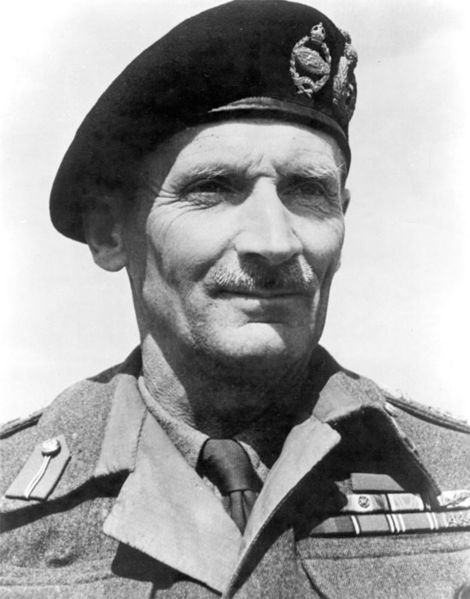
Field Marshall
Sir Bernard Law Montgomery
Montgomery claimed that Market Garden was "90% successful."  While the original plan was highly optimistic in it's expectations, it was mostly successful.  The ultimate goal, Arnhem Bridge, the bridge over the Rhine and into Germany, remained in German hands after Market Garden despite the heroics of the British 1st Airbourne Division.  The Allies successfully punched through the German lines on the Dutch border and drove all the way to the edge of Germany.  They were stopped, in the end, by the accidental positioning of the 9th SS Panzer Division which had been sent to Arnhem for R&R.  Had it not been for this, the Arnhem Bridge would very likely have fallen into Allied hands and the Ruhr valley would have been vulnerable to immediate attack.

The Wisconsin Recall effort set out to disable the Governor's ability to push through any more regressive legislation and the goal was to flip three seats in the state Senate.  Despite the presence of AFP and other Koch Brothers "Panzer Divisions" in the state, we were still able to flip two seats in heavily Republican districts.  This is remarkable when you consider that in the history of recall elections in the United States, only 13 elected officials have ever been recalled.

In addition, we were successful at fending off a weak Tea Party GOP counterattack against two Democratic seats.  While we did not achieve the ultimate goal, we were "90% successful."  And, like Operation Market Garden, we've set the stage for the final push.   Montgomery into Germany, and the Democrats into the Governor's Mansion.

Following Operation Market Garden, the front lines moved significantly further east in the northern sector of the war.  While the final objective, the Arnhem Bridge, was not taken, the advance allowed the Allies breathing room to bring up additional troops and supplies to push on into the Ruhr valley in the coming weeks.  But Operation Market Garden had attempted to go "a bridge too far."

The front line in the Low Countries after Operation Market Garden
Following the Recall efforts, the lines were moved significantly closer to the "German" border.  What needs to happen now is for us to redouble our efforts to get Scott Walker recalled!

The fate of the state is in our hands!

Thursday, August 11, 2011

Recall Elections Both a Win and a Loss for Progressives

Tuesday's recall elections were both a win and a loss for progressives in Wisconsin, and indeed, across the nation.  Putting it into perspective, prior to last Tuesday, there had only been two successful recalls of elected state officials in the previous 80 years and we managed to get two in 6 months.  That's quite remarkable.

People (myself included) are disapointed that we were not able to secure the necessary three seats to derail the reactionary Walker agenda, but hopefully, we'll make the senate less of a rubber stamp for his more egregious agenda items.  I don't hold out a lot of hope that Republican's are capable of independent thought and action from the will of the GOP Collective (for a group that reportedly hates Socialism, they sure do act like the Borg) but perhaps one might jump across the aisle from time to time to vote sensibly.  We'll see.

As The New York Times opines this morning,
Republicans will not admit this, but the numbers showed significant strength for Democrats even in the districts they lost — strength that could grow if lawmakers continue cutting spending and taxes while reducing the negotiating rights of working families. In one rural senatorial district that had not elected a Democrat in a century, the Democratic candidate reached 48 percent of the vote. Another race was also close, and as Nate Silver noted in The Times, the overall results suggest that a contemplated statewide recall of Mr. Walker himself would be too close to call. (Two Democrats face recalls next week.)
The fight continues!  The battle on this front was not a victory, but it does show the tenacity and power of real grassroots organizing.  Well done, Wisconsin!

Tuesday, August 9, 2011

We Are Wisconsin Recruits Packer Gilbert Brown for Recall Call

Awesome!
"Hello this is Gilbert Brown, defensive lineman for the '97 Super Bowl champion Green Bay Packers, calling on behalf of We Are Wisconsin. I have a message for you about Tuesday's election, I know a little bit about playing defense and right now it is time to defend Wisconsin. We are holding the line, putting our children's education before big corporate tax giveaways. It is up to voters like you to make the difference. Please gather your friends and neighbors and go to the polls on Tuesday from 7 am to 8 pm and support Nancy Nusbaum for Senate."
Follow the link above for the audio.

Saturday, June 25, 2011

4 Ways to Remove Justice Prosser from Office

Think Progress:
  1. Resignation: The most obvious solution is that Prosser should immediately step down from his position on the state supreme court. It should be self evident that a violent felon has no business as a judge — much less as a supreme court justice — and if Prosser truely possess the independent judgment he claimed to have in his recent reelection campaign this fact should be clear to him as well
  2. Impeachment: The Wisconsin Constitution permits judges to be removed through an impeachment trial and conviction. As under the U.S. Constitution, this process requires a majority vote in the state assembly to begin impeachment proceedings and a two-thirds vote in the senate to convict. Impeachment could potentially be the quickest way to prevent Prosser from ruling on any more cases until this matter is resolved, as the state constitution provides that “[n]o judicial officer shall exercise his office, after he shall have been impeached, until his acquittal.”
  3. Removal by Address: A supermajority of both houses of the state legislature can also remove Prosser through a process known as “removal by address.” Under this process, “Any justice or judge may be removed from office by address of both houses of the legislature, if two−thirds of all the members elected to each house concur therein.”
  4. Recall: As a last resort, Prosser may be removed by a recall election using the same process that was recently invoked to attempt to recall several state senators. Under Wisconsin law, however, elected officials enjoy a one year grace period during the beginning of their term in office where they are immune from recall. Because Prosser was just recently reelected, this means he could continue to serve as a justice for quite a while before a recall election could take place.